The Art of Meaning Making
My core academic training was in linguistics and philology. My first proper job was teaching and researching how meaning emerges in systems of texts and language. How it exists in the relationship between the whole and the parts, between reader and author, between context and tradition.
Informed by this experience, together with my storytelling work, this thread explores the art of sense- and meaning-making: how to edit a text until it speaks clearly to diverse readers, learn a language until its logic becomes second nature, or question a myth until its plot no longer appears inevitable.
Featured
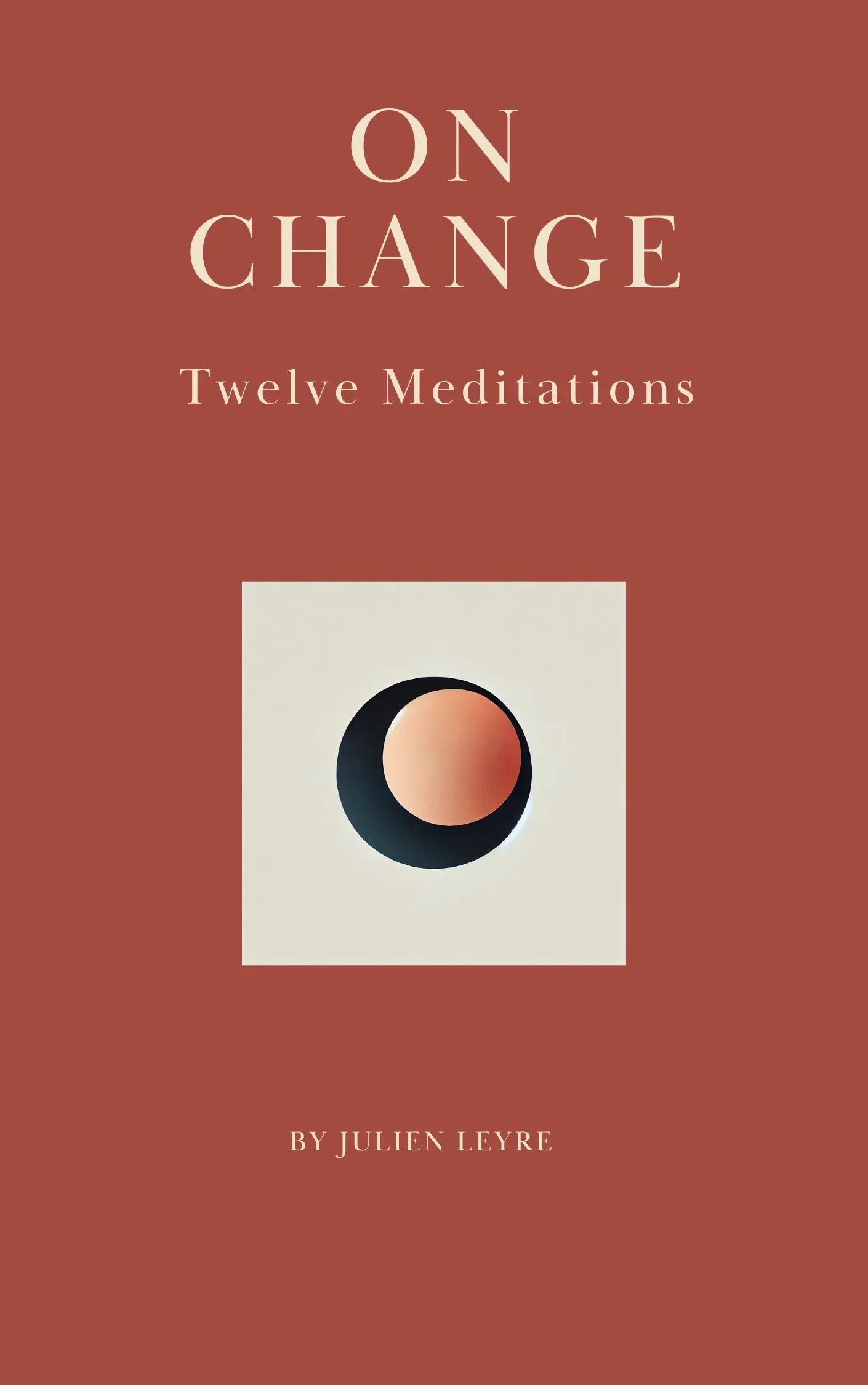
On change
The more we recognise that things have complex genealogies, the more we can imagine different futures. On Change: Twelve Meditations is a collection of philosophical fragments, taking a personal lens to reflect on large-scale societal transformation. The book invites readers on an introspective journey through life in the 2020s, as external shifts meet internal confusion in the lingering aftermath of the pandemic. Each section offers a series of vignettes that weave together intellectual commentary with personal memories of the late 20th century. Buy it here, or read the original blog series that inspired the book.
What is a story
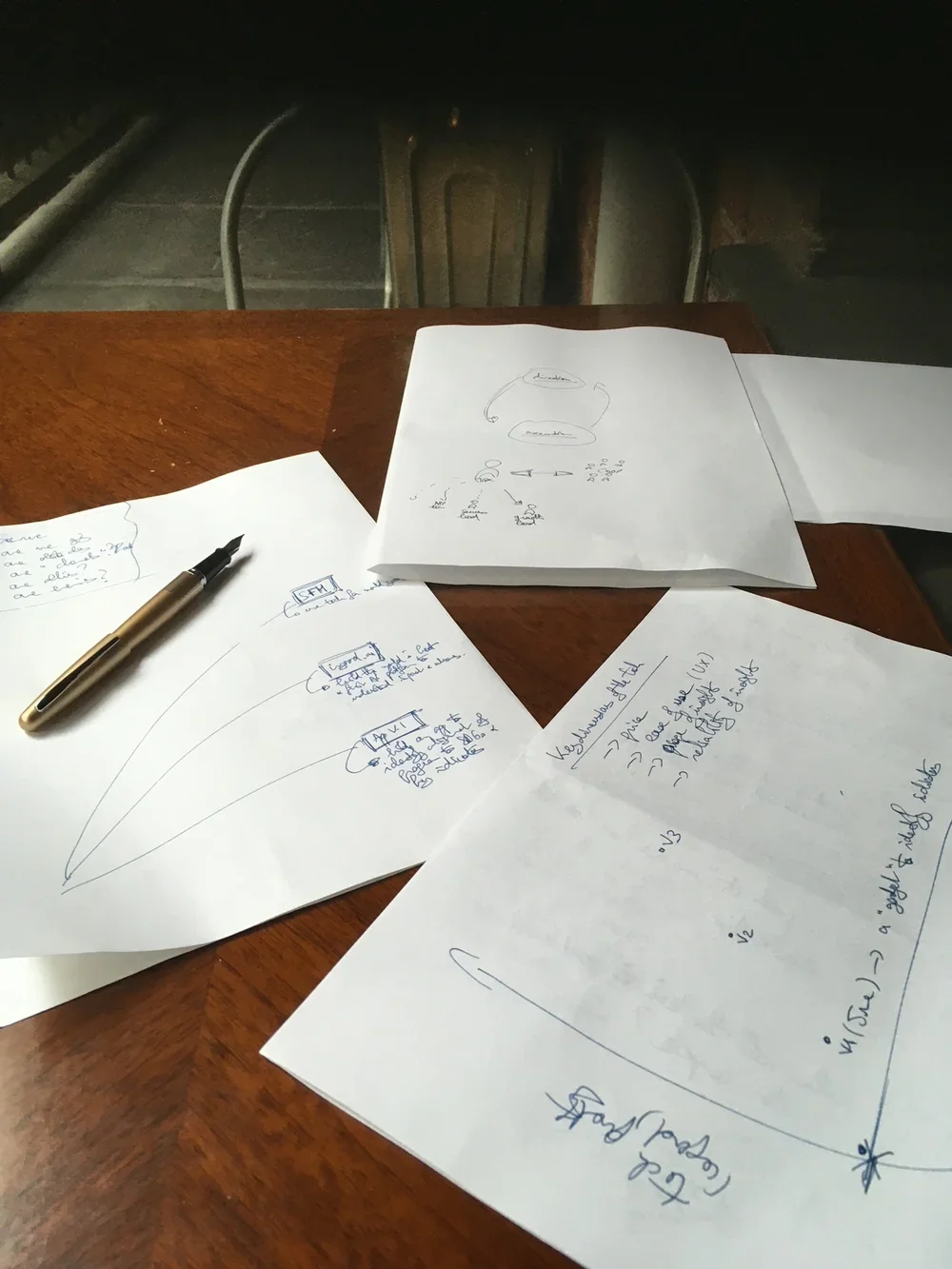
I was a voracious reader as a child, and watched considerable amounts of movies and TV. It never stopped. I also dabbled in storytelling, as a novelist, film-maker, and social innovator. In 2012-2013, I co-hosted a monthly storytelling event for non-native speakers of English. In 2021, I conducted a parallel storytelling practice with my virtue buddy Patrick Laudon. Through those experiences, I got to appreciate the parallel between storytelling and strategy: both essentially take a set of characters, and move them from one situation to another. The art is to find the right sequence of events, matching plot with character. I share this and other insights in a little booklet on What is a story? (in beta version).
Storytelling and narrative
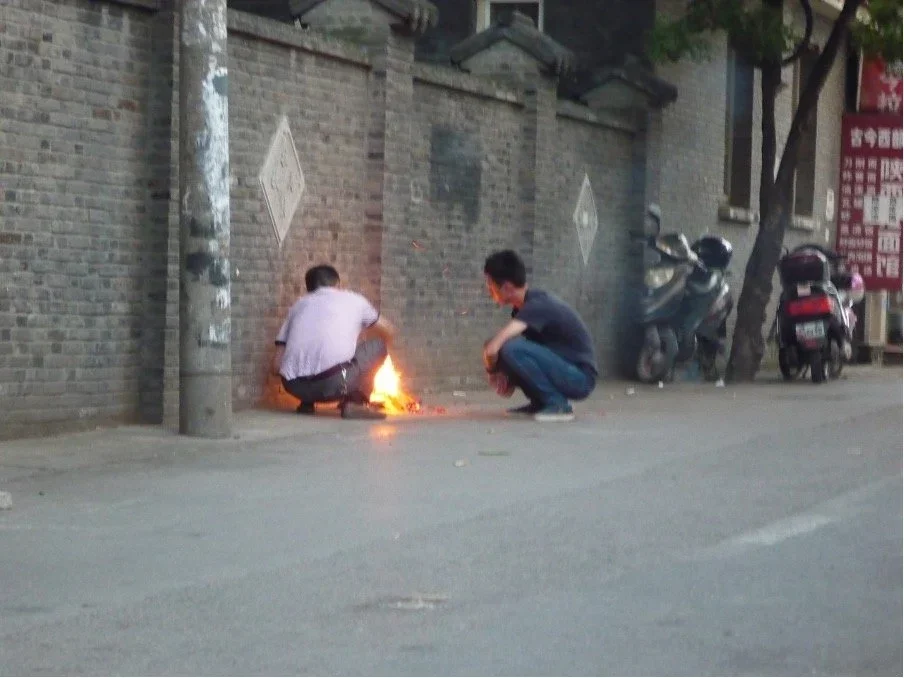
MOURNING RITUALS – GRIEVING THE 2020 THAT WASN’T
There is no change without grief. New structures, no matter how good, require the passing of existing ones. ‘Grieving Rituals for the 2020 that wasn’t’ gathered a diverse group for a creative exploration of this insight. I worked with Helen Palmer to develop and trial new rituals to acknowledge and overcome loss, and develop a deeper understanding of our grief for the year that was and was not. By the end, not only did the group experience better connection to themselves and their feelings about 2020, but also developed greater appreciation for rituals. Reflections were captured in a podcast series.
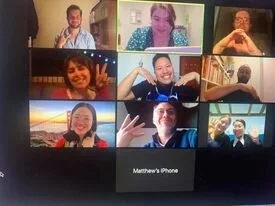
DEFAULT SETTINGS – EXPLORING POLYPHONIC STORYTELLING
Digital environments offer great opportunities for community building beyond usual boundaries, if only because they are natively global. But how can you bring together audiences with diverse languages and cultural expectations for fruitful experiences? Default settings was an experimental creative project, with international participation, exploring questions of reflectivity, discourse, polyphony and audience agency.
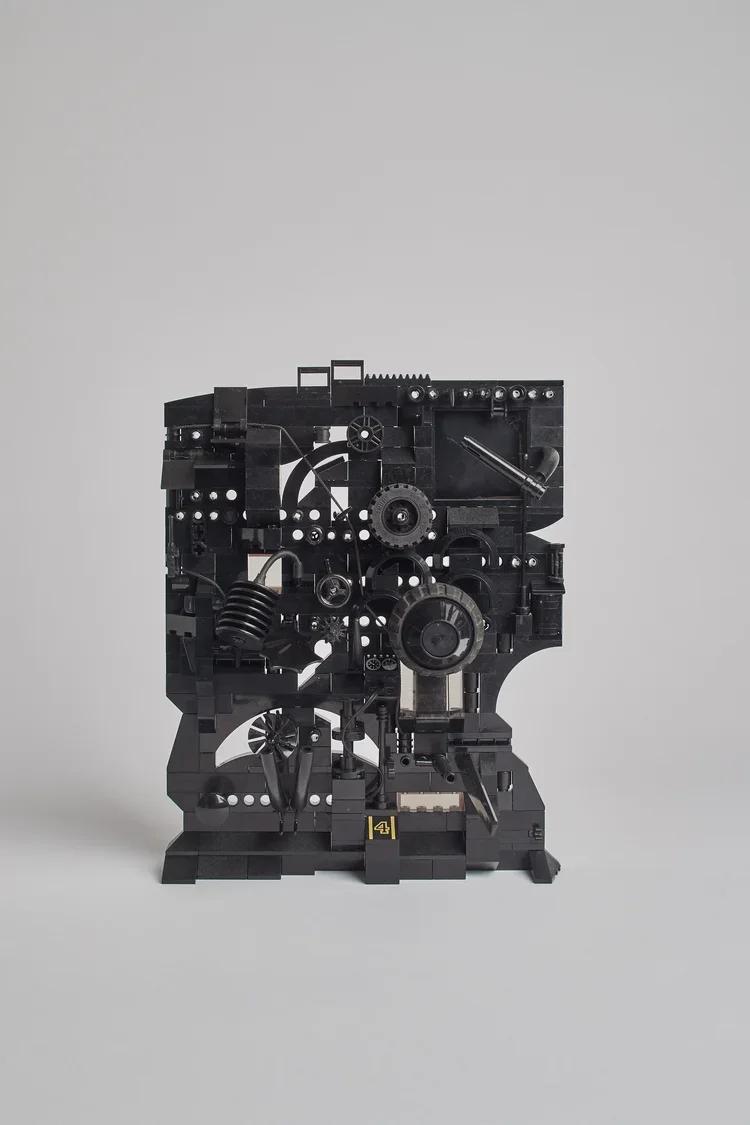
Alta — Lost Tablets
Alta is a text written for Lost Tablets, an ongoing art project by Melbourne architect and artist Jan van Schaik. Each work in the series is accompanied by a commissioned text from a different writer. I contributed a piece that offers a meditation on how we might prepare for catastrophe. The argument: survival requires beauty, excess, and the capacity to seduce nature rather than worship it. And, we should learn from the adaptive intelligence of cities like Venice and Amsterdam, or the wisdom of alto voices, femmes fatales, and Italian grandmothers in all-black mourning dress. Read the piece here.
Blog series
Biomimicry
Co-written with Future Value Global co-advisor and biomimicry expert Michaela Emch, this series offers original lenses on power and innovation, informed by the wisdom of nature.
What is learning
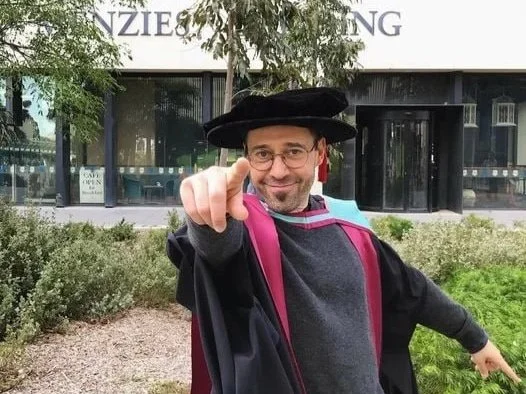
My early professional life unfolded in universities, teaching languages and linguistics. Pedagogy is core to my practice. This series shares reflections on what learning is and how it happens. Including this feature post, where I reflect on writing a PhD, and what it means not to produce a thesis, but to become a doctor.

Meaning-making
This link gathers a range of posts I wrote and shared on my blog over the years, on how ideas find their shape. Topics range from editing, storytelling, or polyphony, to the art of finding the right frame for a question. This is not a structured series, but a fragmented toolbox, exploring craft and practice.
Language as a shared medium
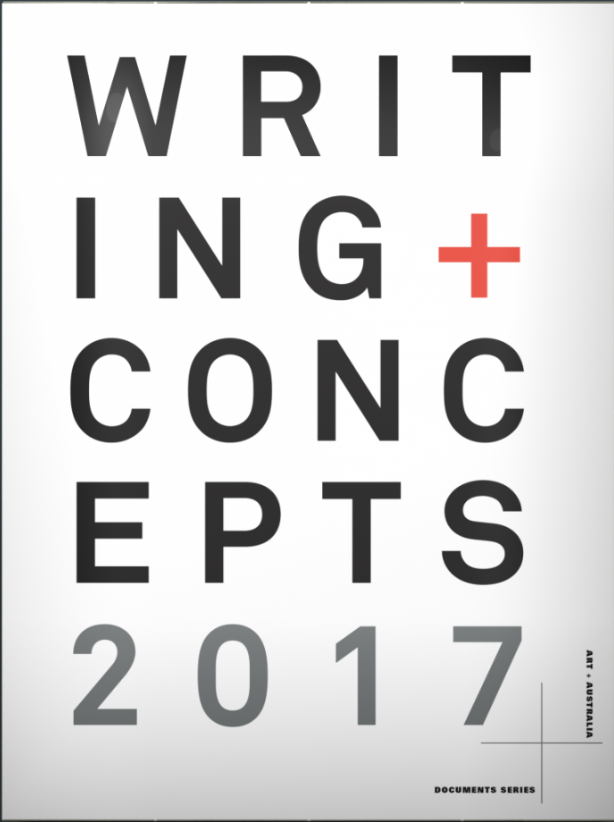
Looking for Common Ground
A lecture-turned-essay written for the Writing + Concepts series at Federation University Ballarat, edited by Jan van Schaik and published in Art+Australia 2017. The piece moves from a porcelain cup at the Gardner Museum in Boston to the practice of collaborative translation at Marco Polo Project, tracing what it means to hold space for another language, another worldview, another person's story. It reflects on hollowness as a model for the good life, and writing as a practice to find common ground across difference. Read the piece here or buy the book.
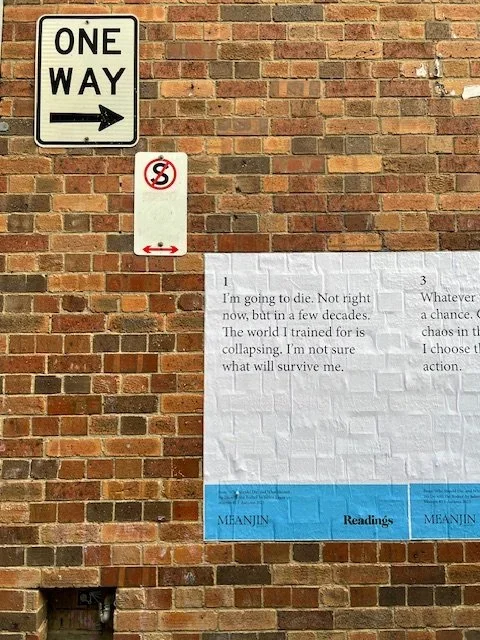
WRITING ON THE WALLS
In 2012, I wrote an essay in The Emerging writer, Volume 3, a publication of the Emerging Writers Festival, on the writer as community builder, with the title ‘Writing on the Walls’. You can read a copy of my essay here. The text was oddly prescient of a future development, where fragments of my essay, Who Should Die and What Should We Do With the Bodies, hung on the walls of the Readings bookstore in Carlton for the launch of Meanjin, in 2023.
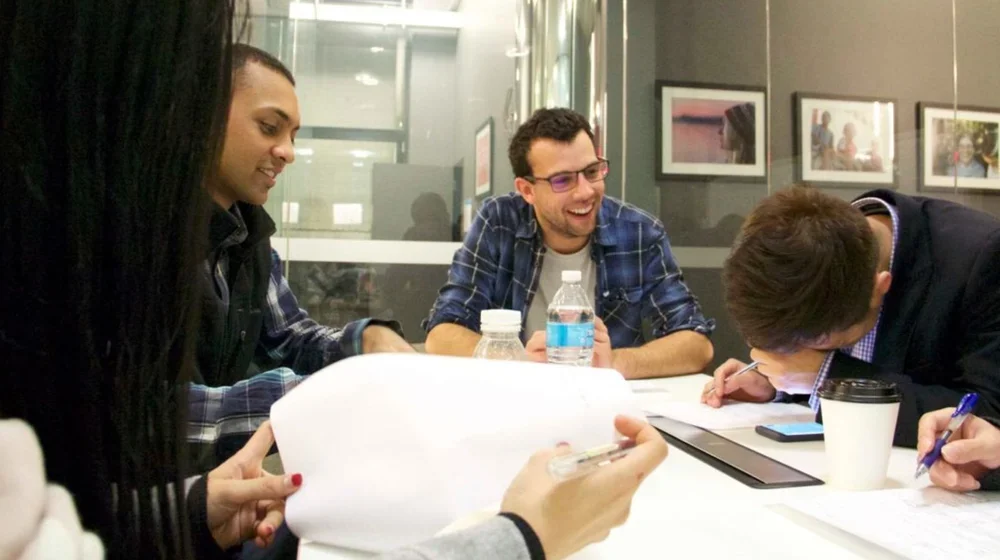
Language learning
I’m a European polyglot and a trained linguist who has taught, studied and struggled with French, English, Chinese and seven other languages. These posts offer an approach to language learning, not as the placing of a new box on your mental shelves, but a restructuring of your mental system, your capacity to act, and your sense of self.

The Bilingual Tai Chi (upcoming)
This booklet and companion app offers an original approach to language learning. Master the structures of a language by repeating and integrating its core grammatical patterns for communicative proficiency.
Workshops
Over the years I have designed and delivered a range of workshops on topics connected to this thread. Slides are available on request.
The Art of Persuasive Writing
This half-day workshop explores the craft of writing clearly and persuasively in English. Participants work through a method for self-editing, focused on reducing the risk of misunderstanding. Originally designed for professionals in intercultural contexts, it is suitable for any group that communicates in writing.
Critical Thinking: Making Good Decisions
Many professional and personal challenges are not about doing, but deciding. This is particularly true for entrepreneurs and innovators. This interactive workshop explores critical thinking as a practical skill for navigating uncertainty, with particular interest in bias, trust, and self-awareness
The Art of Problem Solving
Drawing on design thinking and systems sensing, this workshop helps participants slow down before jumping to solutions, map the problem space, and identify where a small intervention might have disproportionate effects.
The School of Decision Making
Co-designed with Patrick Laudon, this is a structured multi-session program for organisations exploring how individuals and groups make better decisions under uncertainty. Available to run upon request.
Lessons from a Systems Entrepreneur
A talk based on twelve years of atypical professional experience, it distils four nuggets of practical wisdom: separate income from identity, plan for drought and feed on windfalls, embrace personal life as professional infrastructure, and focus on becoming findable rather than pushing out marketing.
Design for Diversity
This human-centred design workshop was originally developed for international students, and adapted for professional and community contexts. Participants work on a shared challenge through a complete design thinking process, using the diversity in the room as a resource rather than an obstacle.
Stretching Cross-Cultural Empathy
Effective work across borders and disciplines depends on the capacity to feel connection with people from different traditions. This workshop offers a reflective space to warm up that capacity. Originally designed for a legal conference, it can serve as opening session for any gathering where people need to find common ground quickly.
The School of AI Bricolage
This workshop helps educators – or any other professionals with a recognisable craft – develop agency in relation to AI, rather than adapting their goals to fit whatever the technology offers. Starting from emotions, it explores existing thoughts and practices to identify the spaces of opportunity that are currently neglected by practitioners and the field.
Digital Thinking for Humanitarians
Co-designed with Simon Davies and originally delivered at a humanitarian conference, this workshop creates the space to examine the implicit mental models we carry about technology. It is suitable for NGO workers, social sector leaders, and anyone working at the intersection of technology and social change.
Beyond Words
Developed through the Marco Polo Project, this workshop focuses on what language teachers and learners often neglect: the non-linguistic dimensions of operating across languages. An introduction to managing ambiguity, reading body language, navigating pragmatics, and developing listening skills that no grammar textbook covers.